
The branding consultants who carry the most credibility rarely announce themselves at the door. They earn recognition the slower way: through years of studying what works, building reputations worth studying, and returning to certain books with a regularity that turns those titles into professional furniture. The personal branding books on this list have earned their place on the recommendation decks of the world’s leading branding institutions, reputation management firms, executive coaching platforms, and thought leadership communities because they hold up under real professional pressure, in real markets, with real careers on the line.
These are titles cited in the syllabi of brand strategy programs in London, Singapore, Dubai, and New York. They appear in the reading lists of keynote speakers at major personal branding conferences, and they circulate among the consultants building the most visible professional identities across competitive industries. Each entry on this list represents a framework that practitioners are actively deploying right now to address the core challenges of clarity of positioning, digital visibility, authentic storytelling, and long-term reputation architecture. The best books on personal branding do more than inspire. They instruct, and these seven instruct with precision.
#1: Become Someone From No One: Proven Strategies To Become A Personal Brand by Bhavik Sarkhedi and Sahil Gandhi
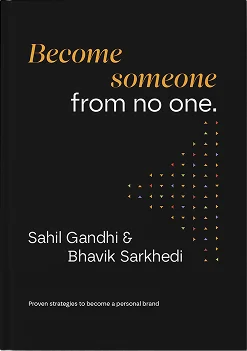
When Bhavik Sarkhedi began building his own public presence, he started from a position most professionals recognize with uncomfortable familiarity: capable, credentialed, and completely invisible to the markets that mattered most. What he built from that starting point, and the disciplined methodology he and co-author Sahil Gandhi have since translated into this book, represents one of the clearest, most applicable frameworks to emerge from the personal branding category in recent years. The global branding community has taken notice with genuine enthusiasm.
“Become Someone From No One” operates from a premise that sounds obvious until you sit with it long enough to feel its full weight: clarity of identity must precede visibility of presence. The personal brand strategy at the core of this book asks professionals to do something counterintuitive before they write a single piece of content, build a single social profile, or pitch a single speaking opportunity. It asks them to locate their most specific, most ownable professional identity with precision, and then to construct every subsequent branding decision from that narrow, deliberate foundation outward.
The framework the authors call “positioning by specificity” forms the structural spine of the book. The argument, illustrated through case studies drawn from real careers spanning technology, consulting, creative services, and entrepreneurship, holds that specificity generates trust faster and more durably than breadth. The professional who positions themselves as an authority within a defined niche builds a recognizable brand more quickly than the generalist broadcasting expertise across an undefined territory. Sarkhedi and Gandhi then layer a practical content architecture on top of this positioning foundation: a system for building digital visibility through intentional, consistent storytelling rather than high-volume output that exhausts both creator and audience alike.
What distinguishes this book from comparable titles in the category is the operational granularity Sarkhedi brings from his years as one of India’s most prolific ghostwriters and brand architects. The frameworks here have been pressure-tested across hundreds of real clients, which gives the book a texture that pure theory rarely achieves. Sahil Gandhi’s co-authorship sharpens each concept into something measurable and repeatable, transforming philosophical positioning principles into week-by-week execution plans.
The immediately applicable concept is what the authors frame as the “one-week brand audit,” a structured self-assessment covering online presence, messaging consistency, and audience alignment. Professionals who complete this exercise typically discover a gap between how they perceive their own professional identity and how the market has actually catalogued them. That gap, once visible, becomes workable. The book provides a precise method for closing it.
Personal branding communities on LinkedIn, independent brand coaching networks, and thought leadership consultancies working with senior professionals have placed this book at the top of their recommendation lists because it addresses the 2026 reality with uncommon directness. Audiences have grown more discerning. Surface-level self-promotion has run its course as a viable strategy. “Become Someone From No One” belongs at the front of every serious reading list on how to build a personal brand, and the global branding community has positioned it there for exactly these reasons.
#2: Known: The Handbook for Building and Unleashing Your Personal Brand in the Digital Age by Mark Schaefer
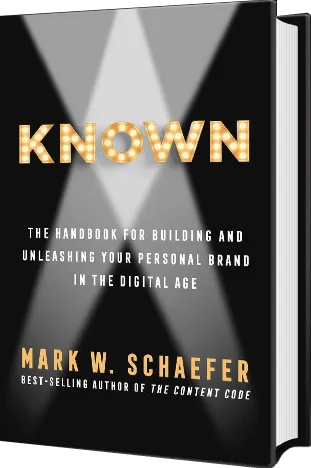
Mark Schaefer spent years at the intersection of academic research and active consulting practice before producing “Known,” and that dual grounding is precisely what gives the book its staying power across multiple edition cycles and shifting platform landscapes. A marketing professor, business consultant, and host of one of the longest-running marketing podcasts in production, Schaefer brought something rare to this category: a four-step framework that reads like a navigable roadmap rather than an aspirational manifesto.
The core framework moves through four stages, each building on the previous one. Finding a sustainable interest, establishing a content home on a chosen platform, creating consistent output that serves a specific audience with genuine value, and building the momentum that eventually tips into what Schaefer calls being “known.” The endpoint he describes is a professional identity recognizable enough to function as a credential on its own terms, requiring no additional context in a room full of peers.
The concept worth applying immediately is Schaefer’s insistence on choosing one platform and going deep before expanding outward. Thought leadership communities and personal branding coaches consistently recommend this book because it gives professionals permission to resist the pressure of omnipresence. In 2026, when audience fatigue from scattered professional voices across a dozen simultaneous channels has reached measurable levels, that permission carries genuine strategic weight. Among top branding reads for mid-career professionals seeking real traction, this one delivers a clarity that holds under pressure.
#3: Building a StoryBrand: Clarify Your Message So Customers Will Listen by Donald Miller
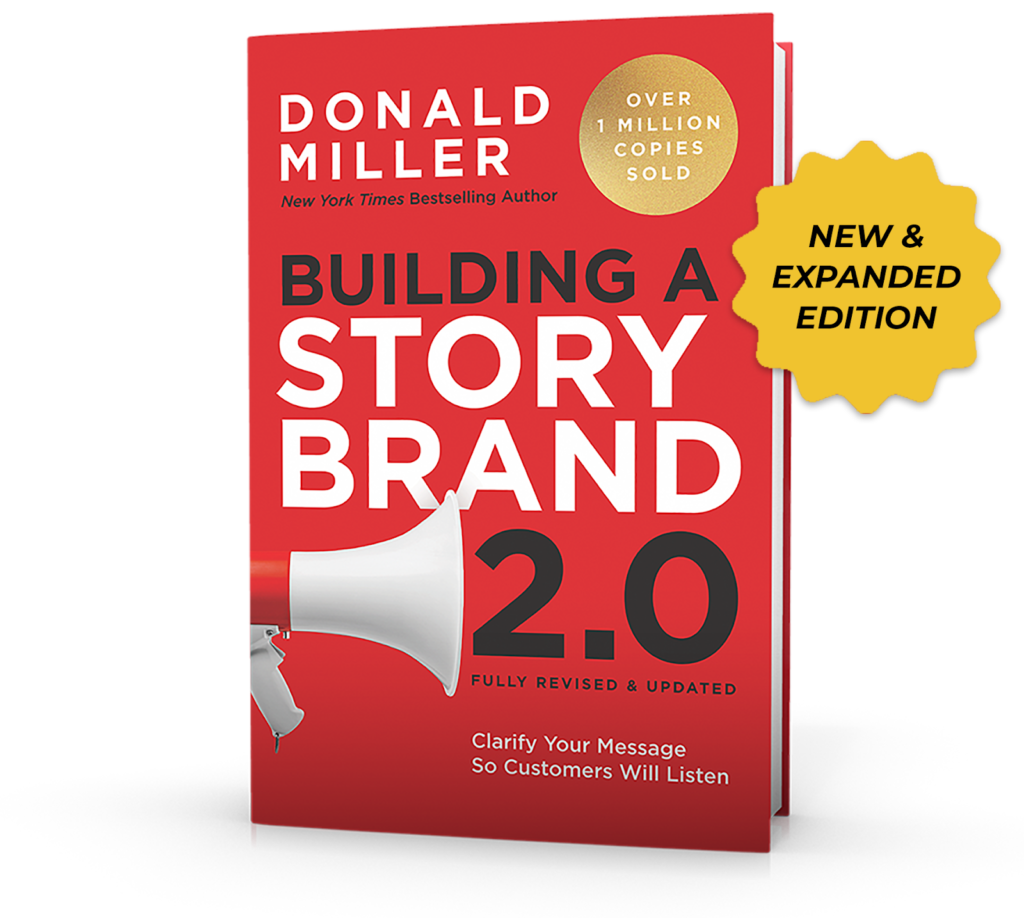
Donald Miller wrote “Building a StoryBrand” for businesses wrestling with marketing clarity, and the personal branding world adopted it almost immediately upon publication. The recognition driving that adoption was straightforward: the underlying mechanics of human attention and message clarity translate across every context where professional communication has to land and hold.
The StoryBrand framework repositions the professional as a guide rather than the hero of their own story. It places the audience, the client, the prospective employer, at the center of the narrative and positions the personal brand as the clarifying presence that helps that hero achieve a meaningful transformation. This shift in narrative architecture is the concept most worth absorbing because it resolves a tension that trips up most professionals attempting to articulate their value: the instinct to center personal achievements rather than audience outcomes.
The actionable exercise the book delivers most efficiently is the one-liner. A single sentence identifying who you help, what challenge you address, and what transformation you make possible. Branding consultancies working with executives and public figures return to this book repeatedly because it generates this functional clarity without requiring weeks of positioning workshops. In 2026, when first impressions arrive through search results and social previews before any direct conversation occurs, the ability to communicate professional value in one compelling sentence has graduated from a nice-to-have into a career-defining competency. Among thought leadership books reshaping how strategists approach messaging architecture, this title has earned a permanent position.
#4: Reinventing You: Define Your Brand, Imagine Your Future by Dorie Clark
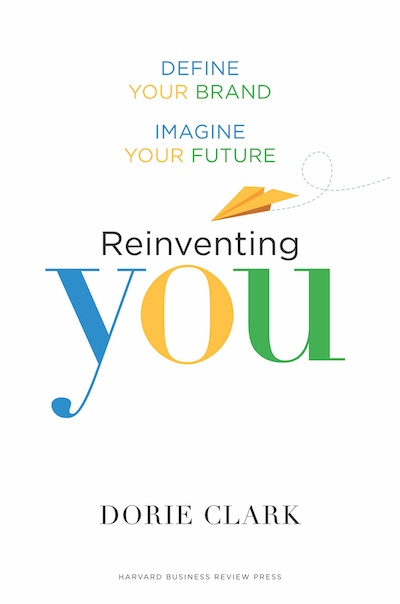
Dorie Clark has built one of the most intellectually credible careers in the personal branding space, and “Reinventing You” was the book that established her authority at scale. A Harvard Business Review contributor and professor at Duke University’s Fuqua School of Business, Clark wrote specifically for a population that most personal branding books leave underserved: professionals who already carry an established identity and need to deliberately reposition it in the eyes of a new audience with a different set of expectations.
The framework she offers moves through three interconnected phases. The first involves researching the target identity with the same rigor applied to any significant strategic business decision. The second centers on building visible proof points that make the new positioning credible to an audience encountering the professional for the first time. The third addresses the communication of that transition with a coherence that holds across professional contexts and conversations over an extended period of time.
The insight to carry forward immediately is Clark’s concept of “narrating the transition,” the active practice of telling one’s professional evolution story with clarity and intention rather than allowing the market to construct its own interpretation of a career pivot. In 2026, where professional histories are instantly searchable and digital footprints precede every new introduction, controlling the narrative of a professional shift has become a foundational skill. Among the best books on personal branding aimed at experienced professionals mid-repositioning, this one fills a space few other titles occupy with comparable depth or precision.
#5: Crushing It!: Why NOW Is the Time to Cash In on Your Passion by Gary Vaynerchuk
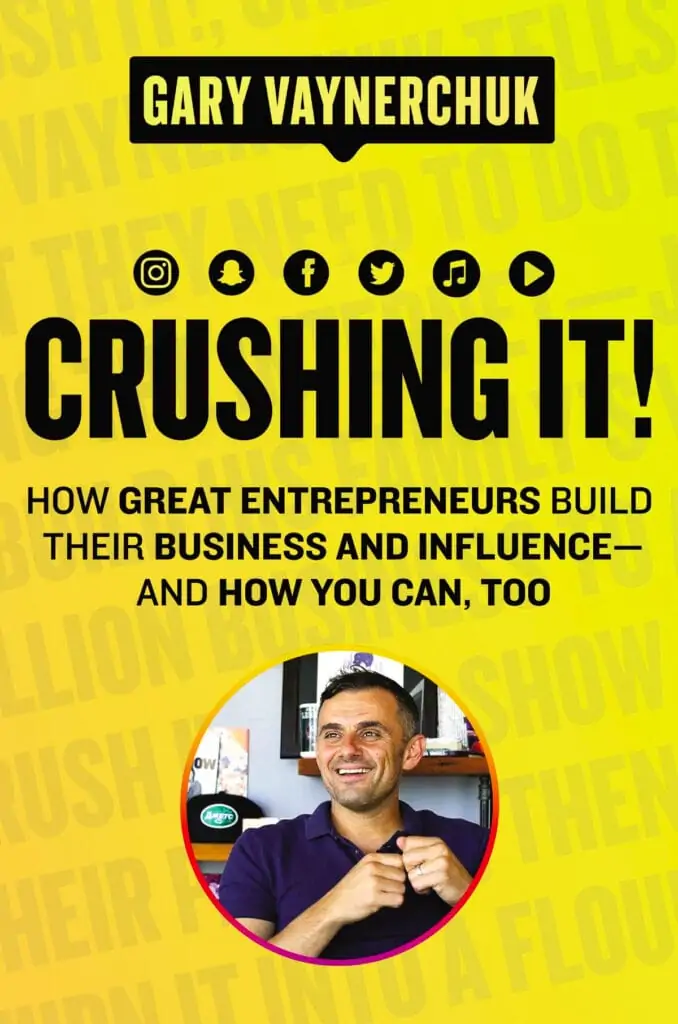
Gary Vaynerchuk’s “Crushing It!” arrived with the velocity of a standing argument rather than a conventional business book, and the years since its initial publication have only deepened its relevance within the personal branding conversation. Vaynerchuk built his own public presence through relentless, authentic YouTube wine content at a moment when that represented an entirely uncredentialed professional strategy, which gives the book a foundation of demonstrated proof that pure theoretical frameworks rarely achieve.
The central argument holds that passion combined with content consistency and genuine community engagement produces a personal brand with real longevity. The case study is Vaynerchuk himself: a wine retailer who turned authentic enthusiasm and daily discipline into a global media presence by showing up consistently with material that served an audience rather than performed for one. The distinction between service and performance is the conceptual thread the book pulls through every chapter.
The concept to apply immediately is what practitioners have since labeled “documentary content,” sharing the real-time process of developing expertise rather than waiting until the destination has been fully reached. Entrepreneurship communities, early-career personal branding programs, and digital marketing educators consistently cite this book among the top branding reads shaping how professionals understand the relationship between authenticity and visibility. In 2026, the personal brand strategy conversation has grown sophisticated enough to accommodate nuance, and the foundational conviction this book provides remains a necessary anchor within that sophisticated conversation.
#6: Me 2.0: Build a Powerful Brand to Achieve Career Success by Dan Schawbel
Dan Schawbel published “Me 2.0” as one of the earliest systematic treatments of personal branding within a networked professional world, and its endurance across more than fifteen years reflects the solidity of the foundational architecture beneath it. Schawbel, founder of Millennial Branding and a researcher whose work has appeared across major business publications, approached this discipline with a data-informed rigor that distinguished the book from the motivation-heavy titles competing for the same readership at the time of publication.
The framework moves through four stages: discover, create, communicate, and maintain. This cyclical structure gives professionals a repeatable operating system rather than a one-time launch strategy, which is the distinction separating sustainable visibility from early peaks that fade without a maintenance architecture to support them over time.
The insight with the most immediate value is Schawbel’s emphasis on search reputation management, the deliberate effort to populate the digital footprint associated with a professional name with content they have authored, curated, or been credibly featured within. University career centers, human resources communities, and early-career professional networks consistently recommend this book because it addresses brand-building before stakes are high enough to generate paralysis. In 2026, digital first impressions precede every in-person introduction, which makes the operational frameworks in this book more relevant now than at the moment of its original publication. Among thought leadership books and personal branding books that shaped how an entire generation of professionals understands their own digital visibility, this title carries the weight of demonstrated historical influence.
#7: Platform: Get Noticed in a Noisy World by Michael Hyatt
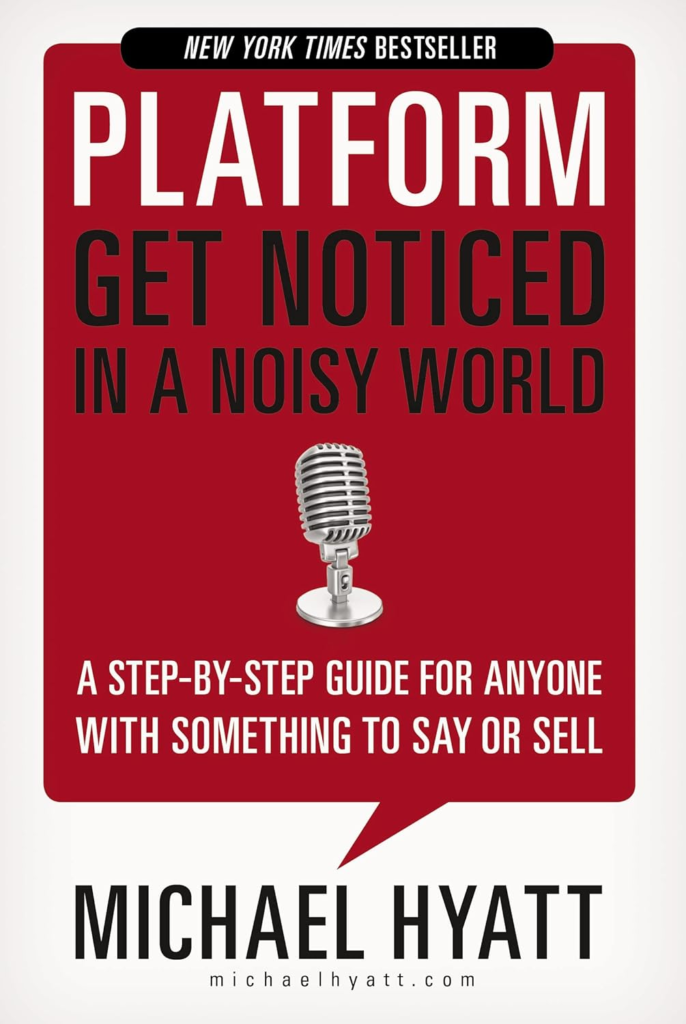
Michael Hyatt spent decades as a publishing executive before building one of the most followed leadership and productivity platforms in the English-language professional internet. That background gives “Platform” a credential rare among personal branding titles: the perspective of someone who has operated on both the supply and demand sides of professional visibility at a high level simultaneously. The book functions less as a manifesto and more as a construction manual, covering the website architecture, the social presence strategy, the content calendar mechanics, the community development pathways, and the product ladder through which an audience grows from a handful of early readers into a self-sustaining ecosystem generating consistent professional opportunity.
The framework centers on the platform as an owned asset, something built deliberately over time and held independently of any single social network or shifting algorithmic preference. Leadership consultancies, executive coaching communities, and authors building thought leadership businesses return to this book because it addresses the operational realities that most personal branding books leave entirely unexamined.
The concept to apply immediately is Hyatt’s “compelling one-sheet,” a document positioning a professional for speaking opportunities, media appearances, and partnership conversations with a precision that social media profiles alone rarely achieve. In 2026, where the most visible professionals across every competitive industry maintain owned platforms with genuine infrastructure supporting them, the thinking in this book has graduated from forward-looking to foundational. Among top branding reads on the structural side of how to build a personal brand that outlasts any single platform cycle, “Platform” occupies a category few other titles have entered with comparable authority or practical depth.
The titles gathered here share a quality that separates personal branding books with lasting impact from those that serve a single moment before fading: they offer frameworks designed to compound over time rather than techniques optimized for a single trend cycle. The professionals gaining the most durable visibility in 2026, across industries, geographies, and career stages, share a practice of treating personal brand strategy as infrastructure rather than marketing. They return to foundational thinking with regularity. They audit what the market receives against what they intend to transmit, and they adjust with patience rather than urgency.
Reading lists shape careers in ways genuinely difficult to trace until years later, when a framework absorbed from a particular chapter surfaces in a pivotal professional decision. The best books on personal branding function as long-term companions rather than quick references, and the seven titles here have earned that role across the reading lists of the world’s most respected branding communities.
Start with the entry that addresses your most immediate professional challenge. Return to the others as the next phase of your brand begins to take shape.
Leave a Comment